
Filters
The Point of View
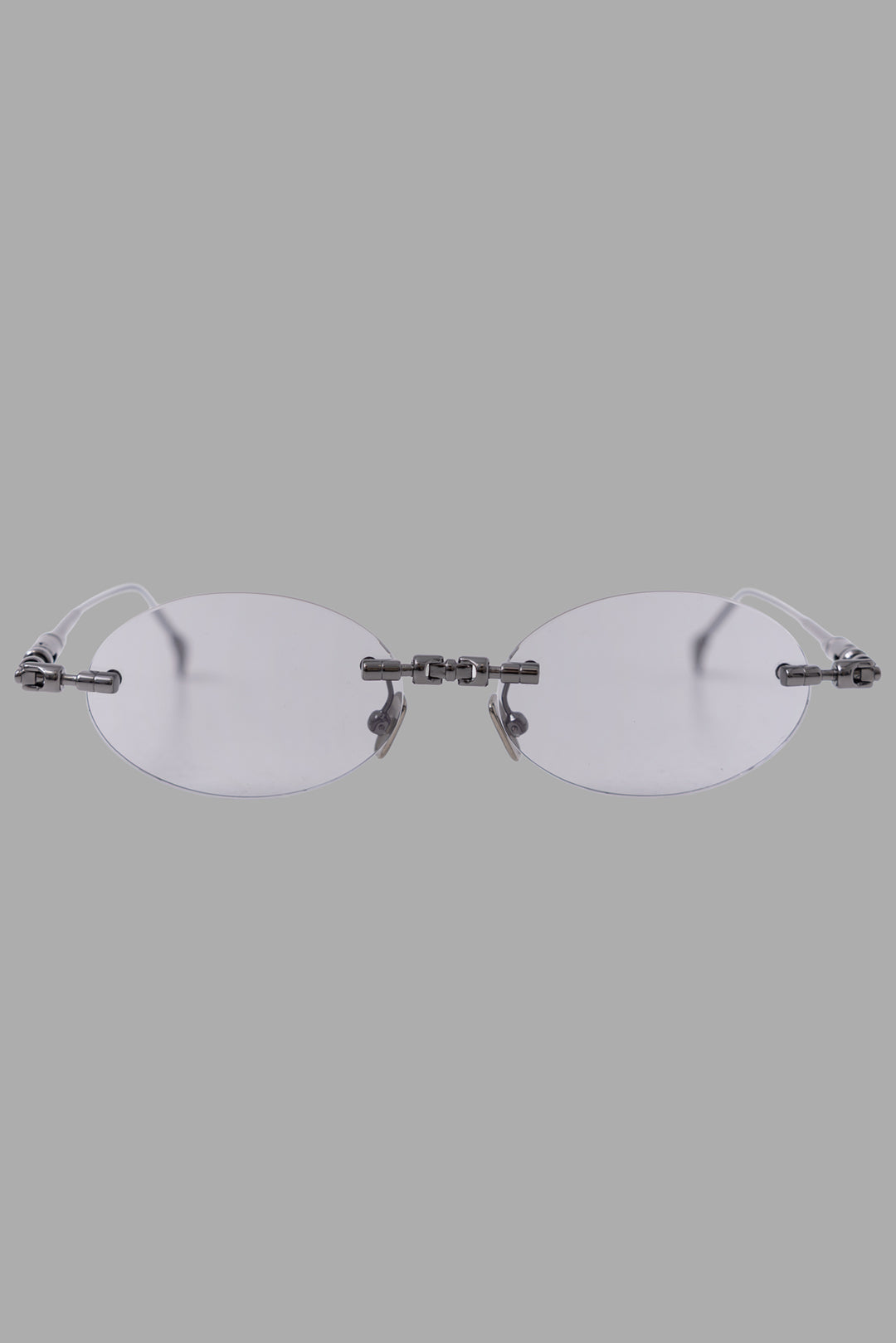
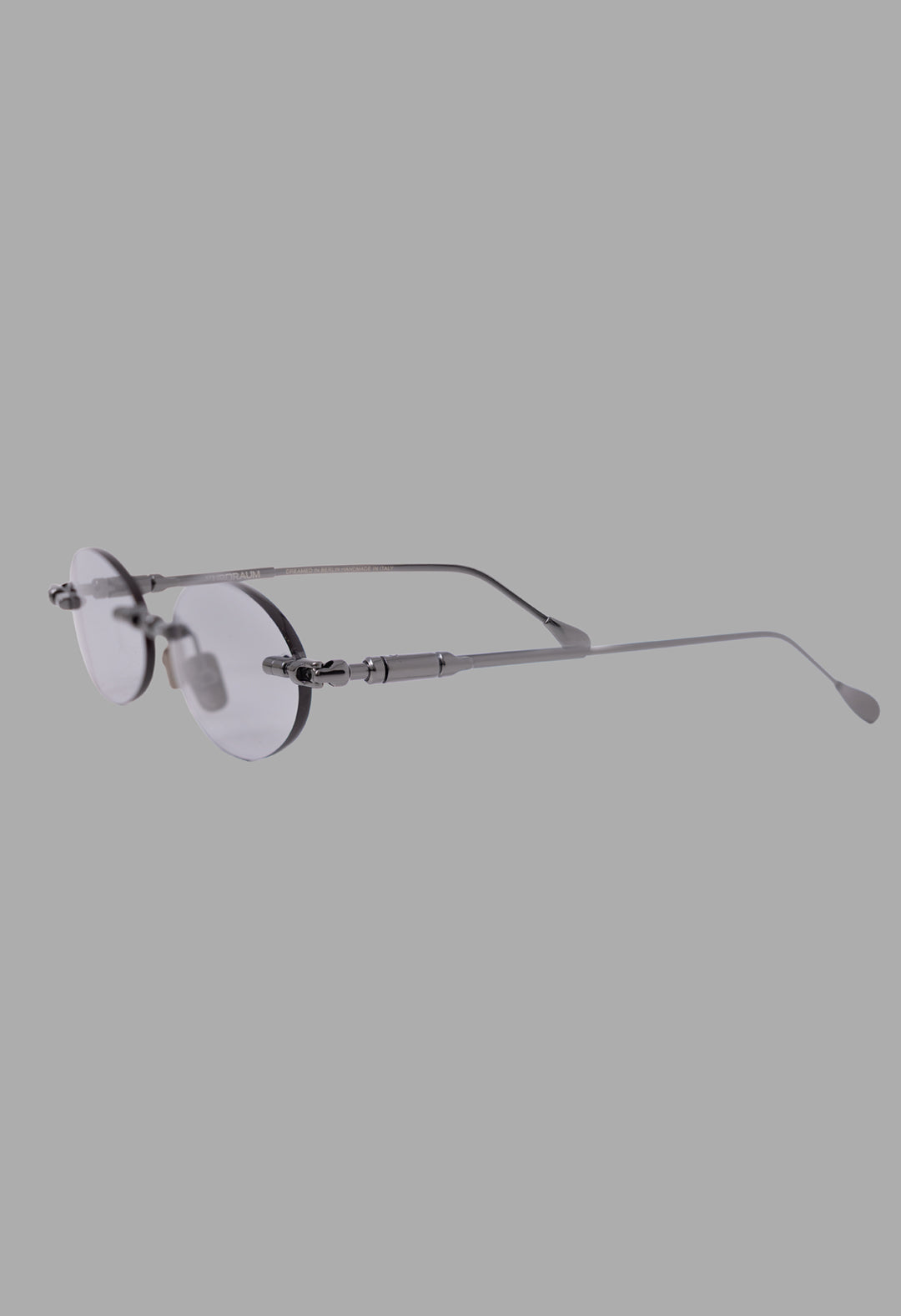
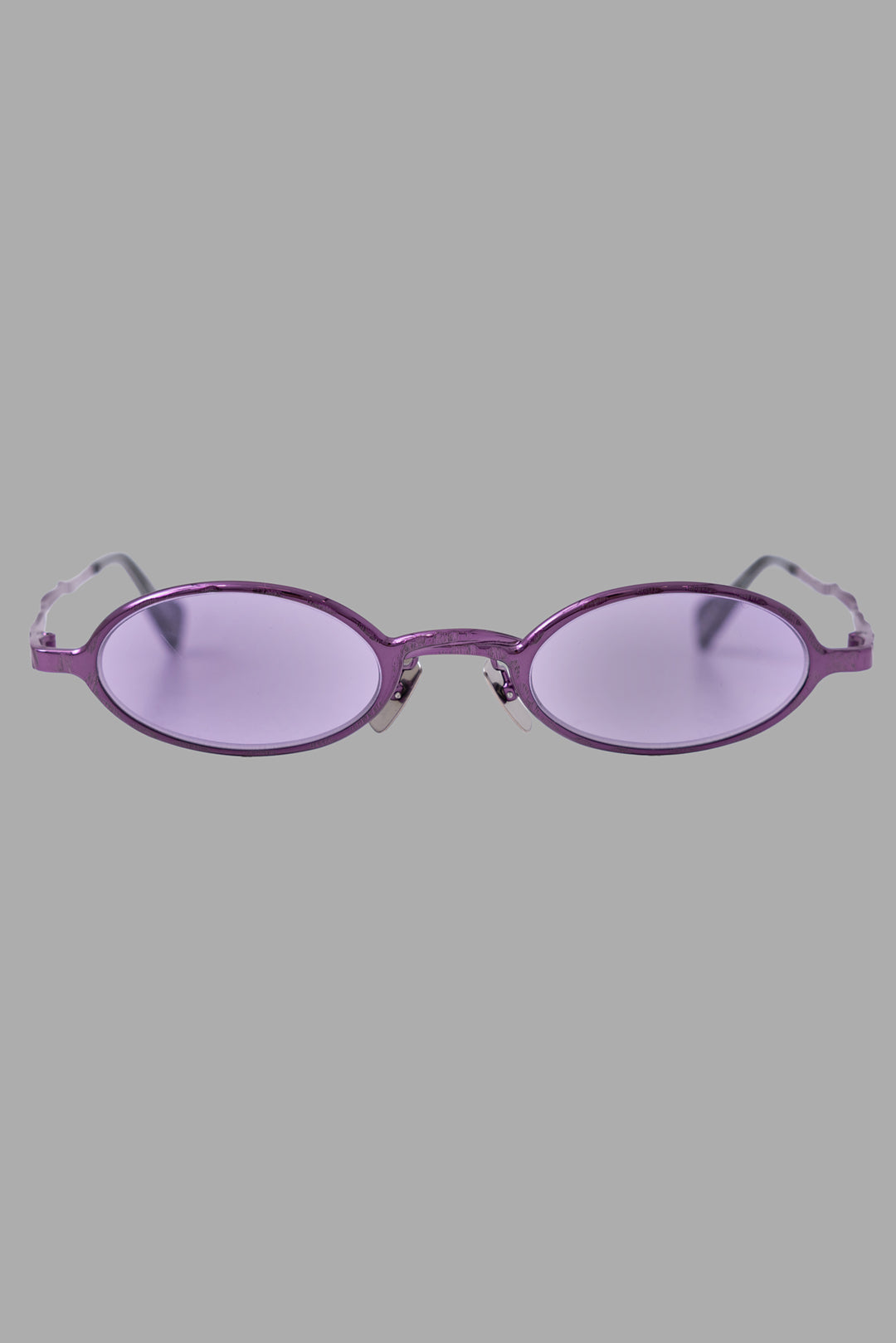
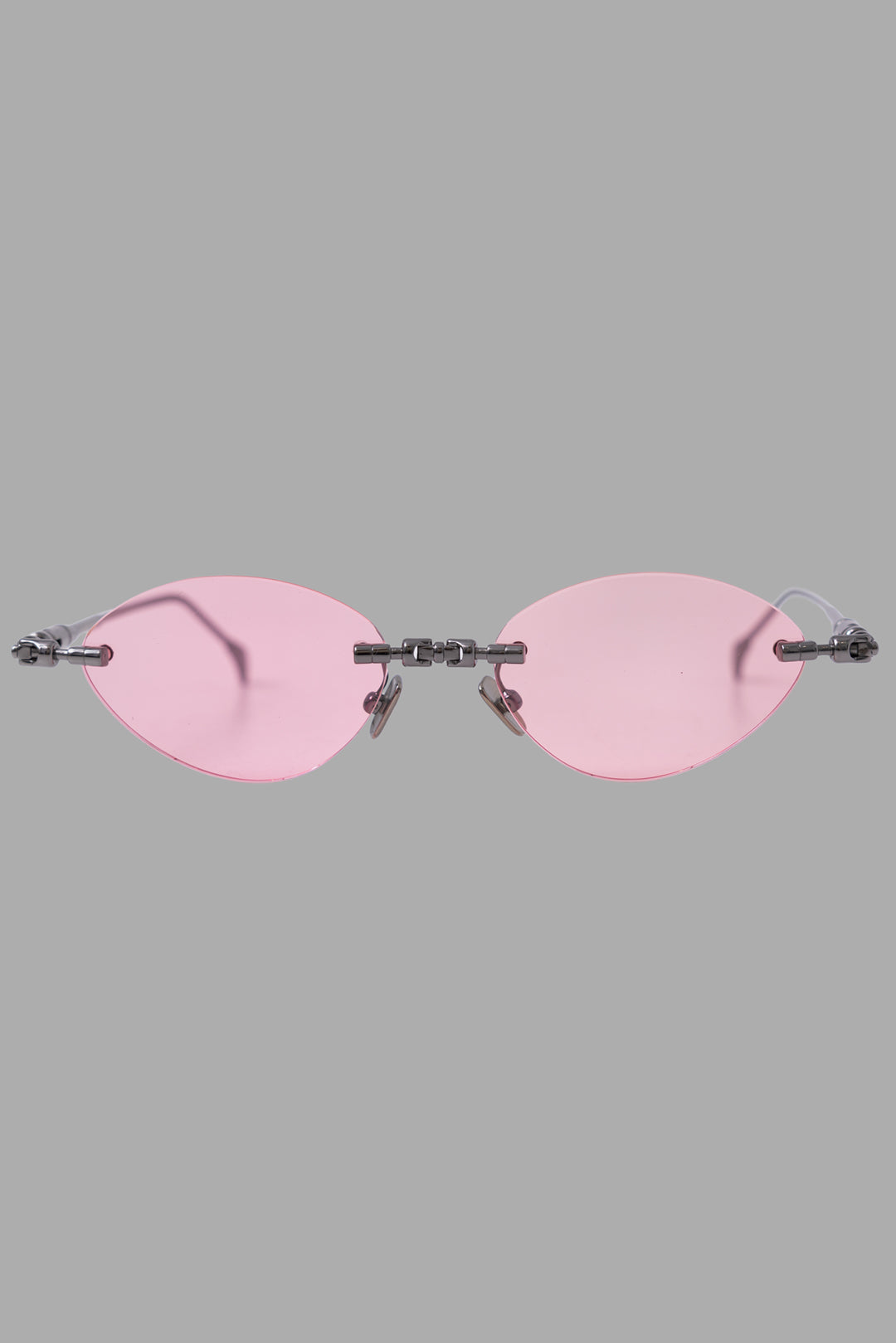
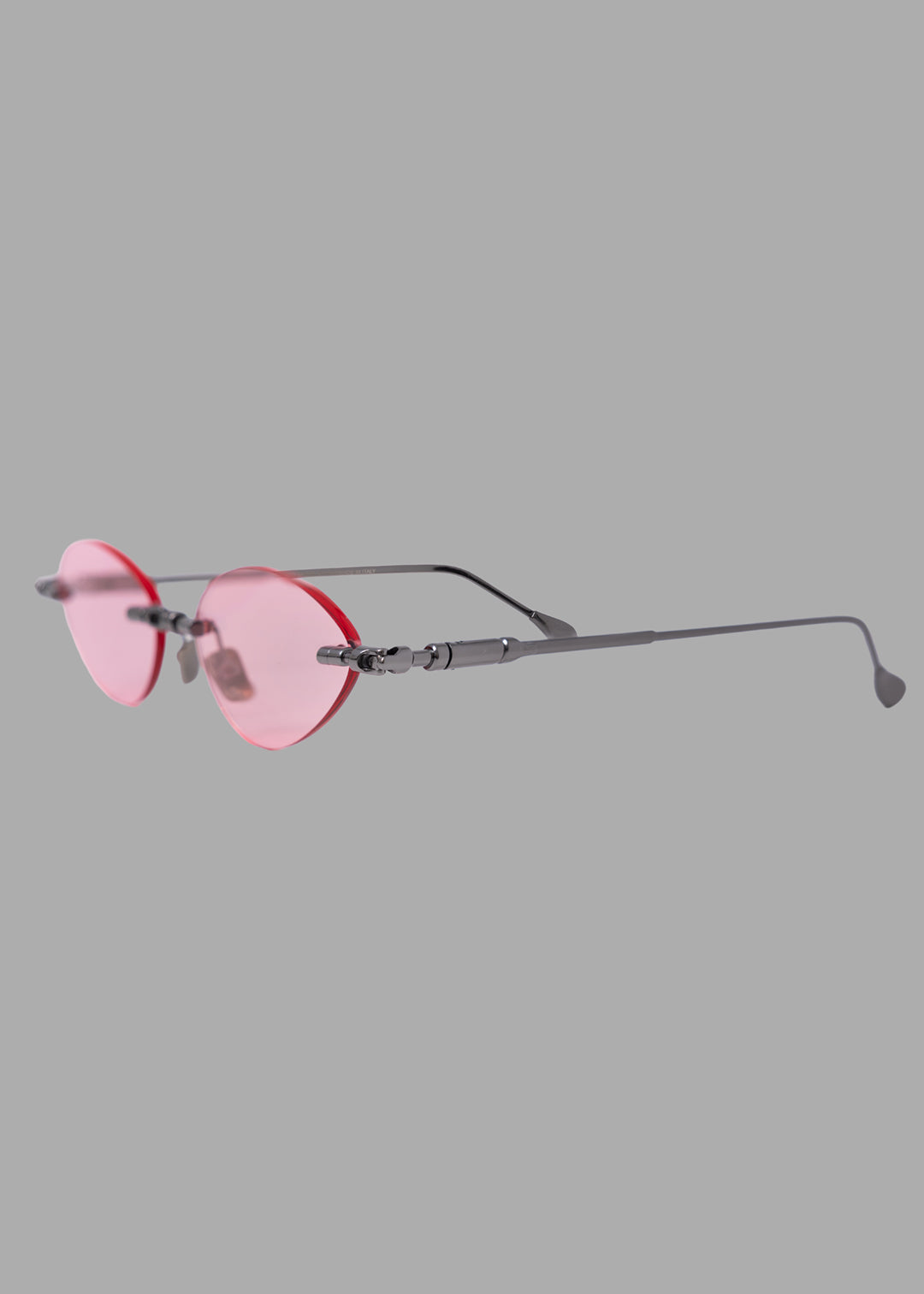
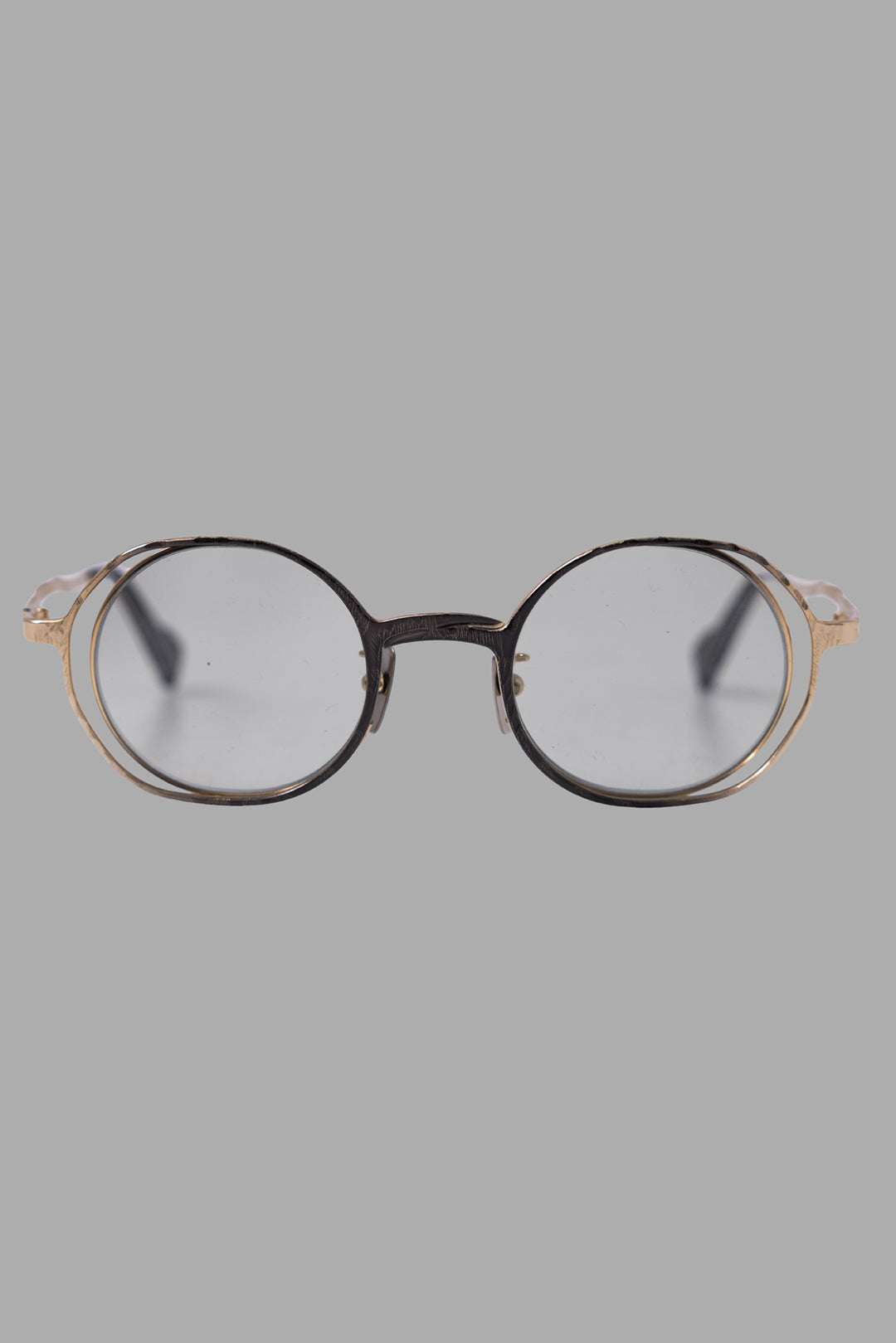
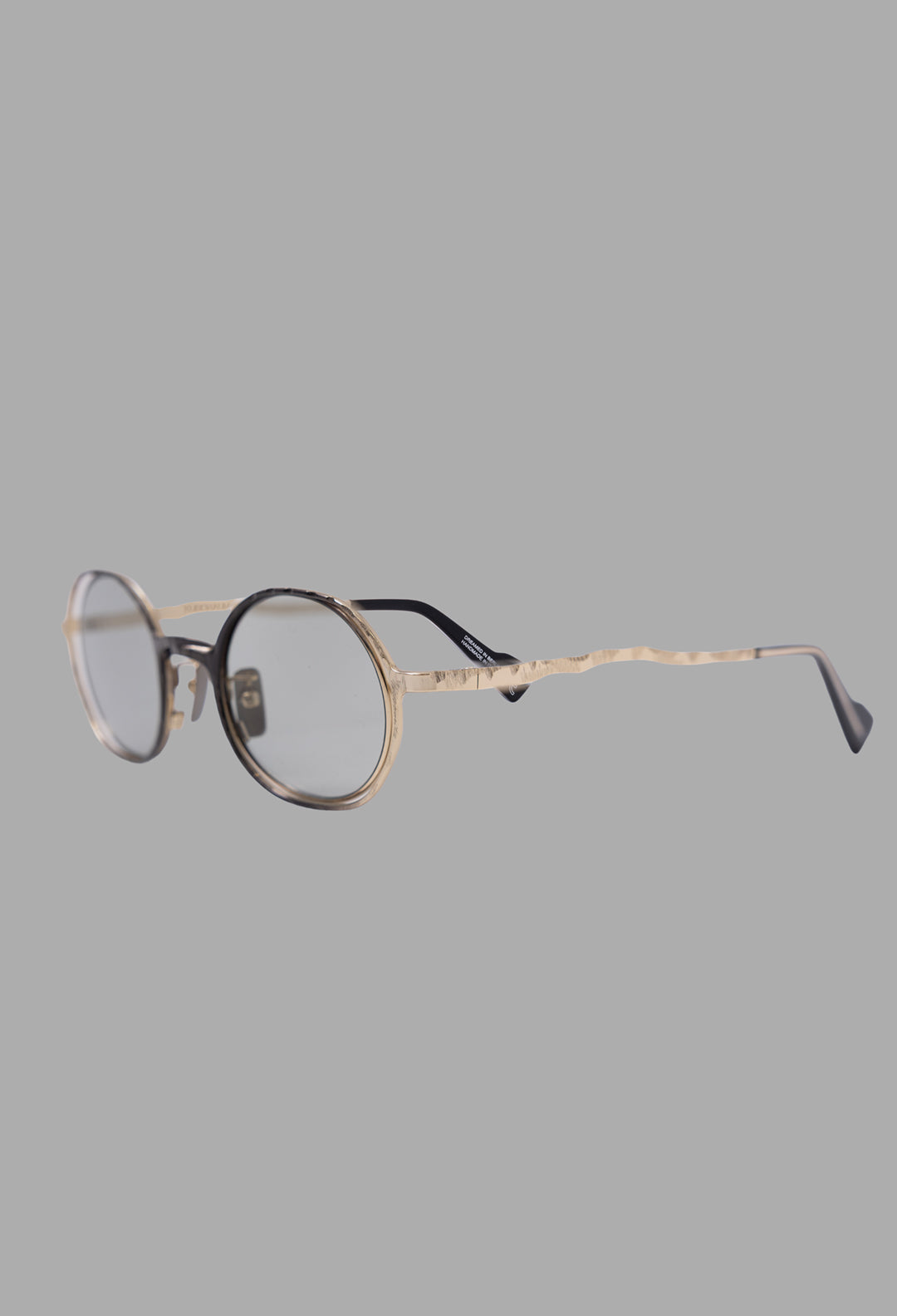
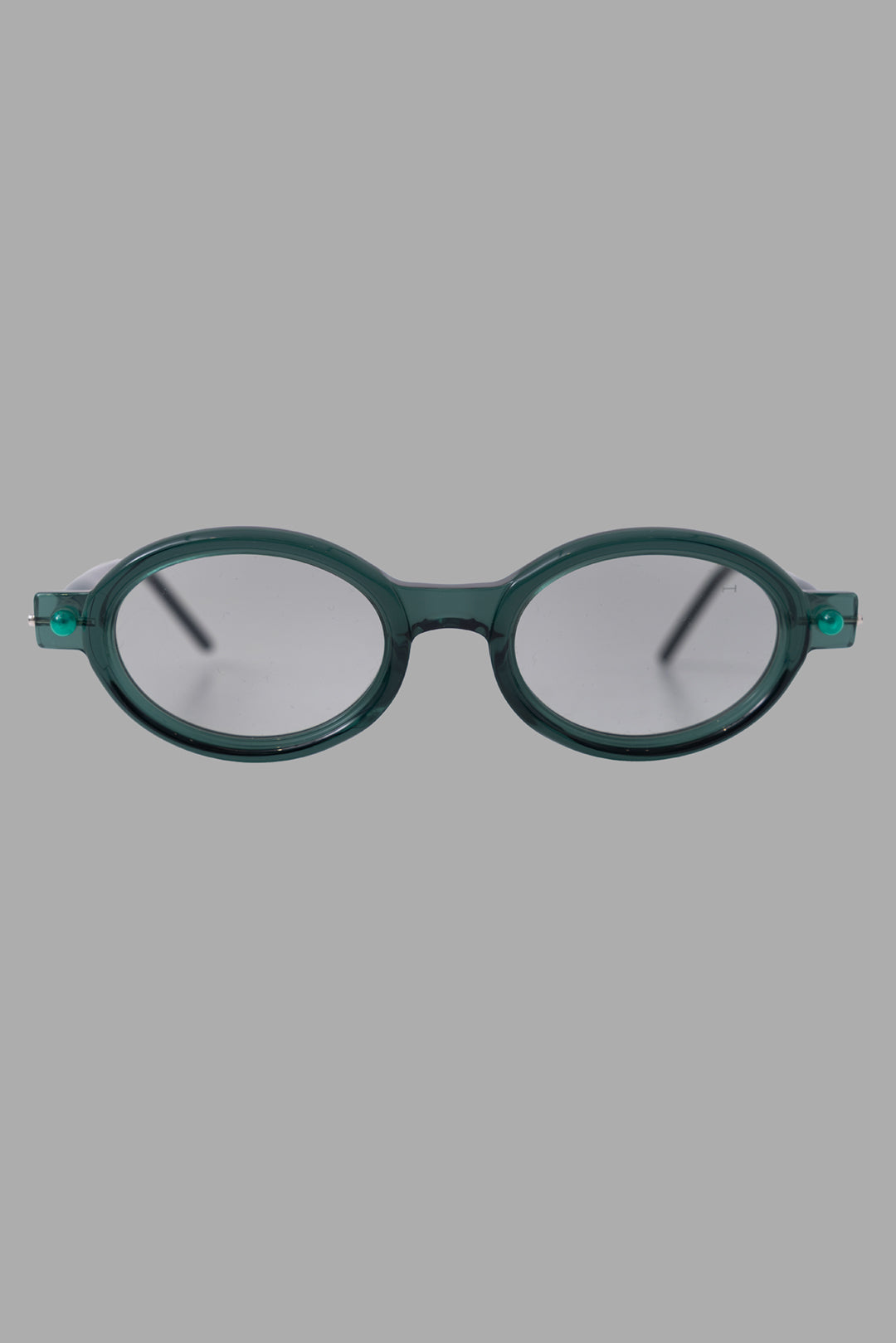
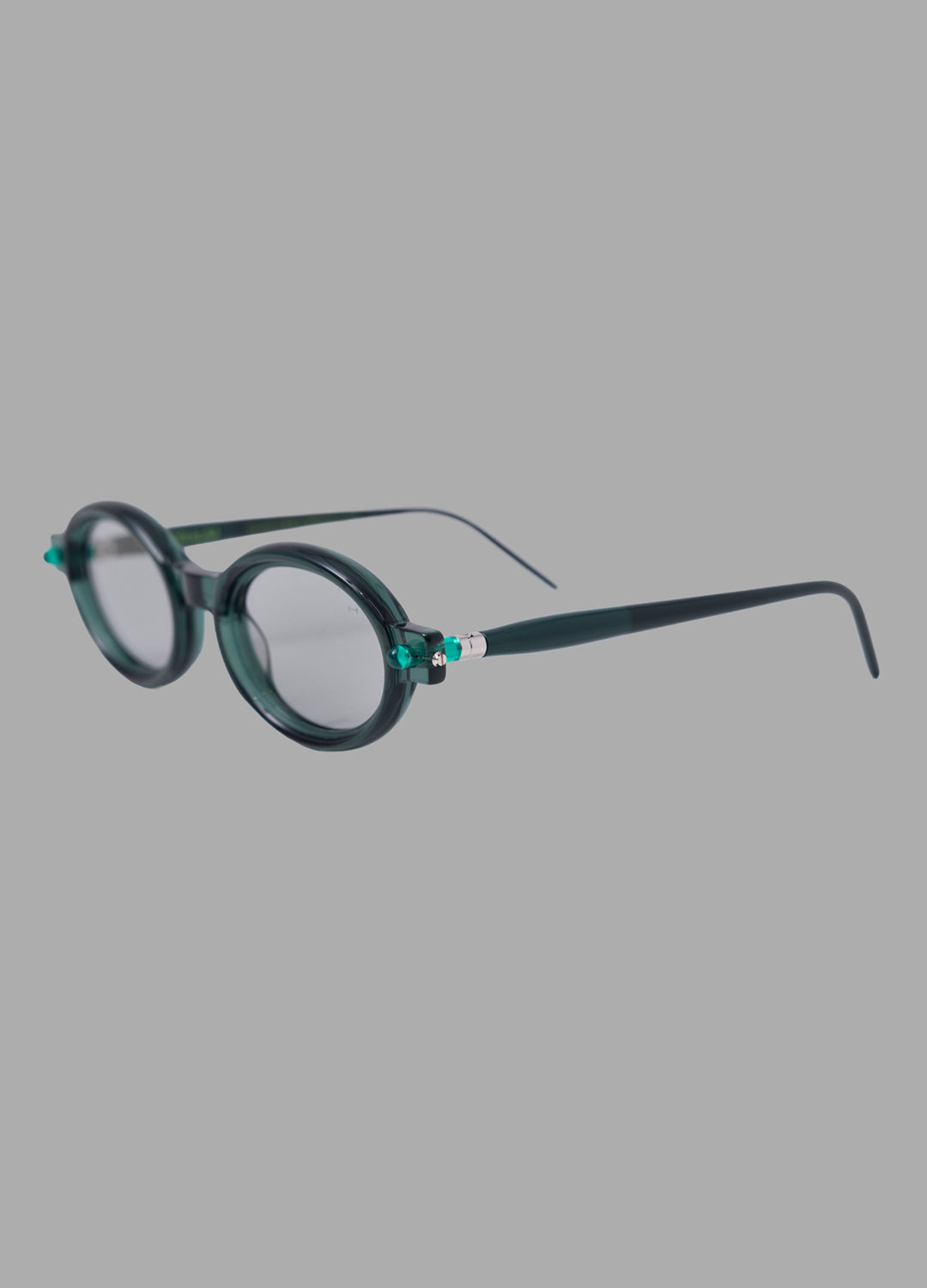
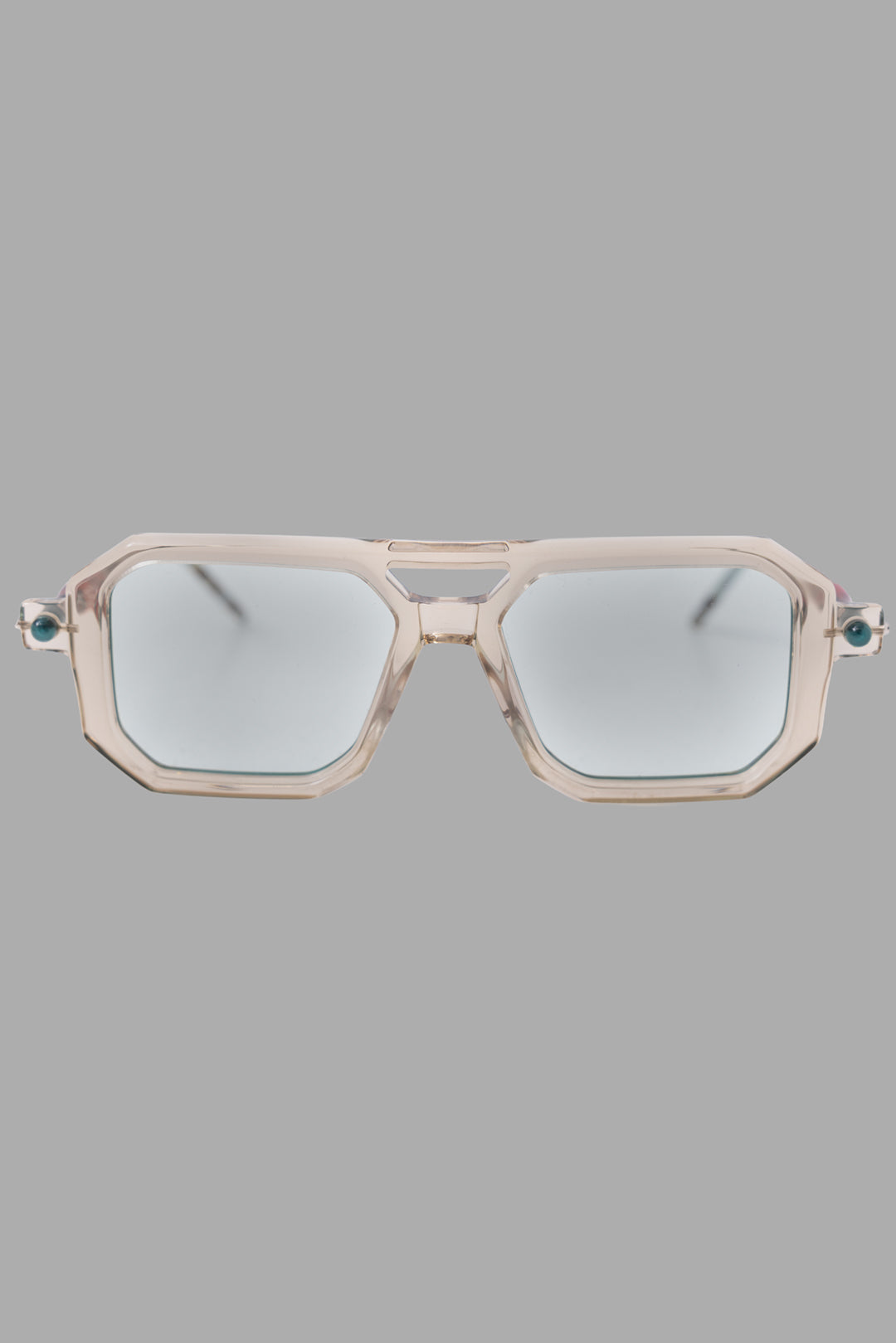
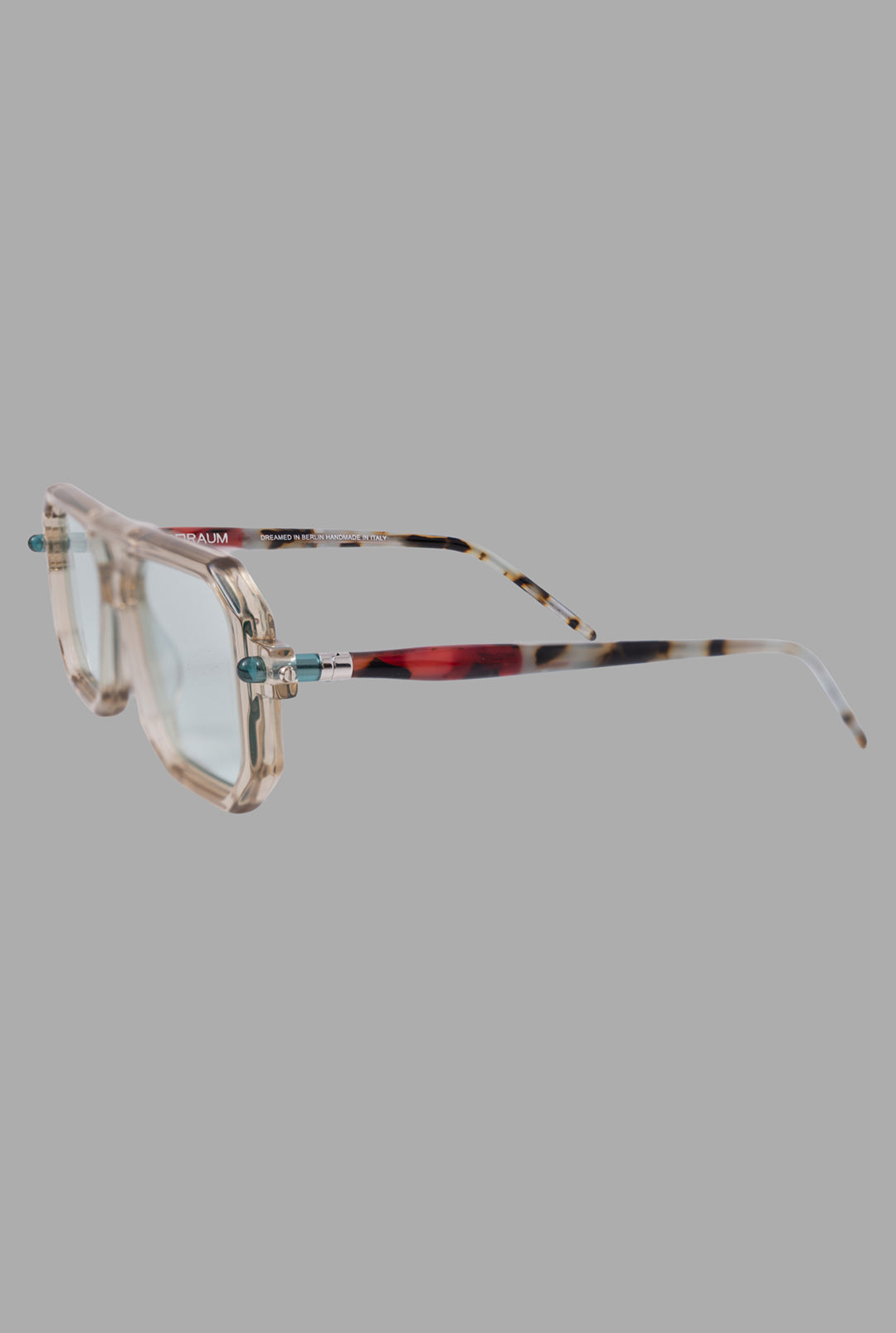
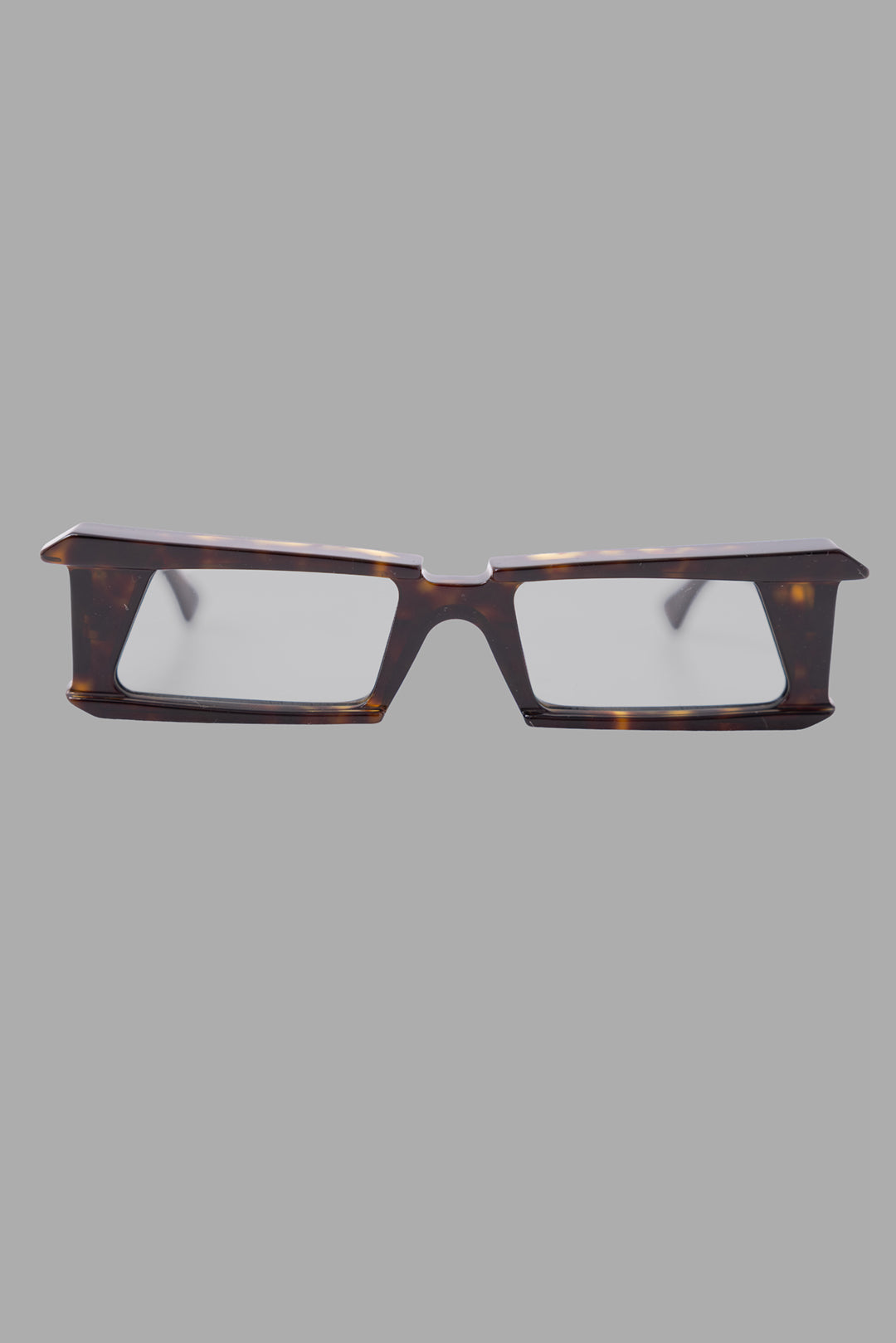
Kuboraum treats eyewear as masks—objects that amplify the wearer’s character rather than recede into neutrality. On the rail: bold sunglasses and refined optical frames cut from thick Mazzucchelli acetate, metal and rimless constructions, with shapes that range from squared and architectural to softly rounded. Expect frames that feel sculptural in the hand and read graphic on the face; lenses span deep tints for sun to clear, “24h” day‑to‑night options for optical and sun‑adjacent wear.
Silhouette & Construction
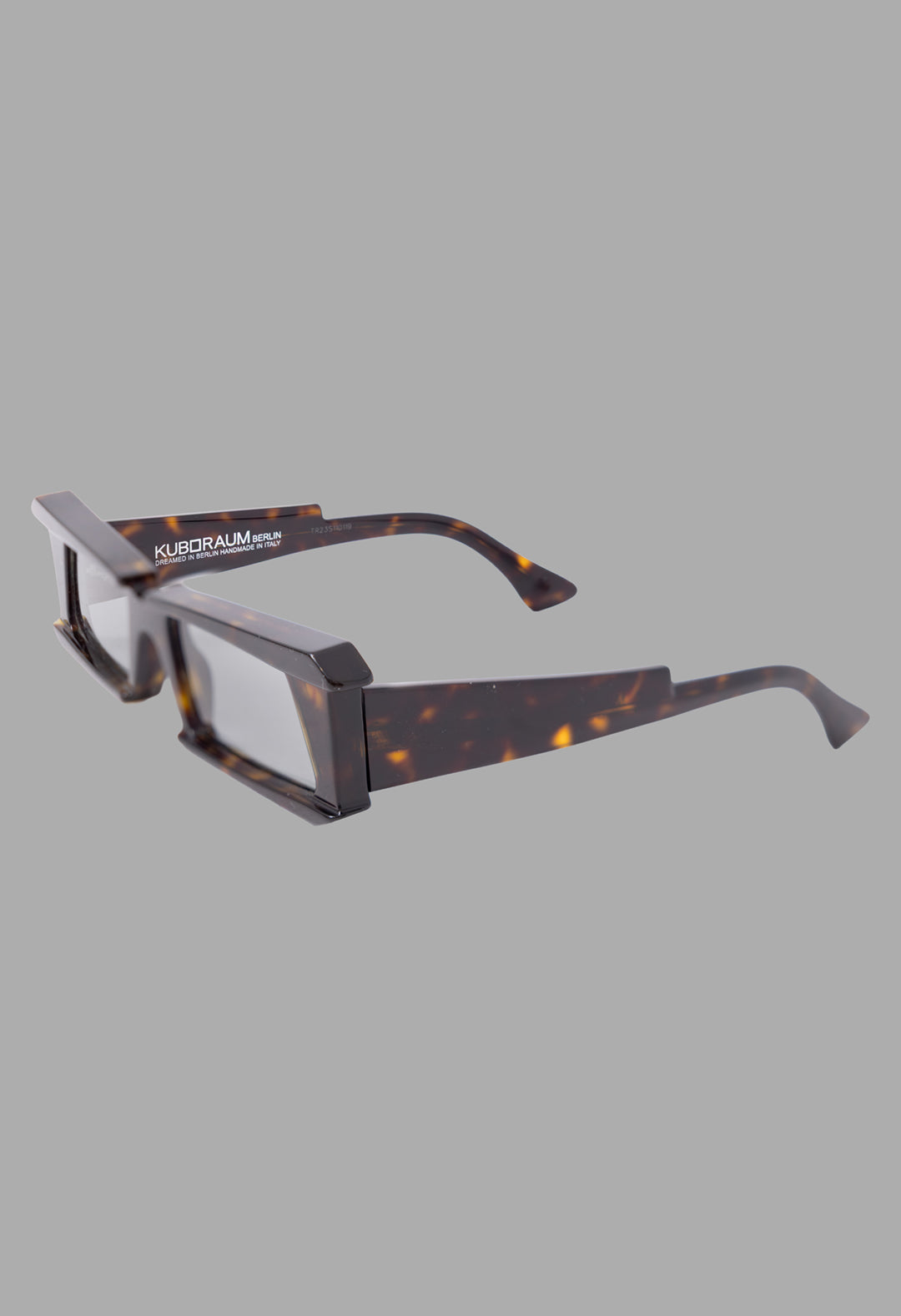
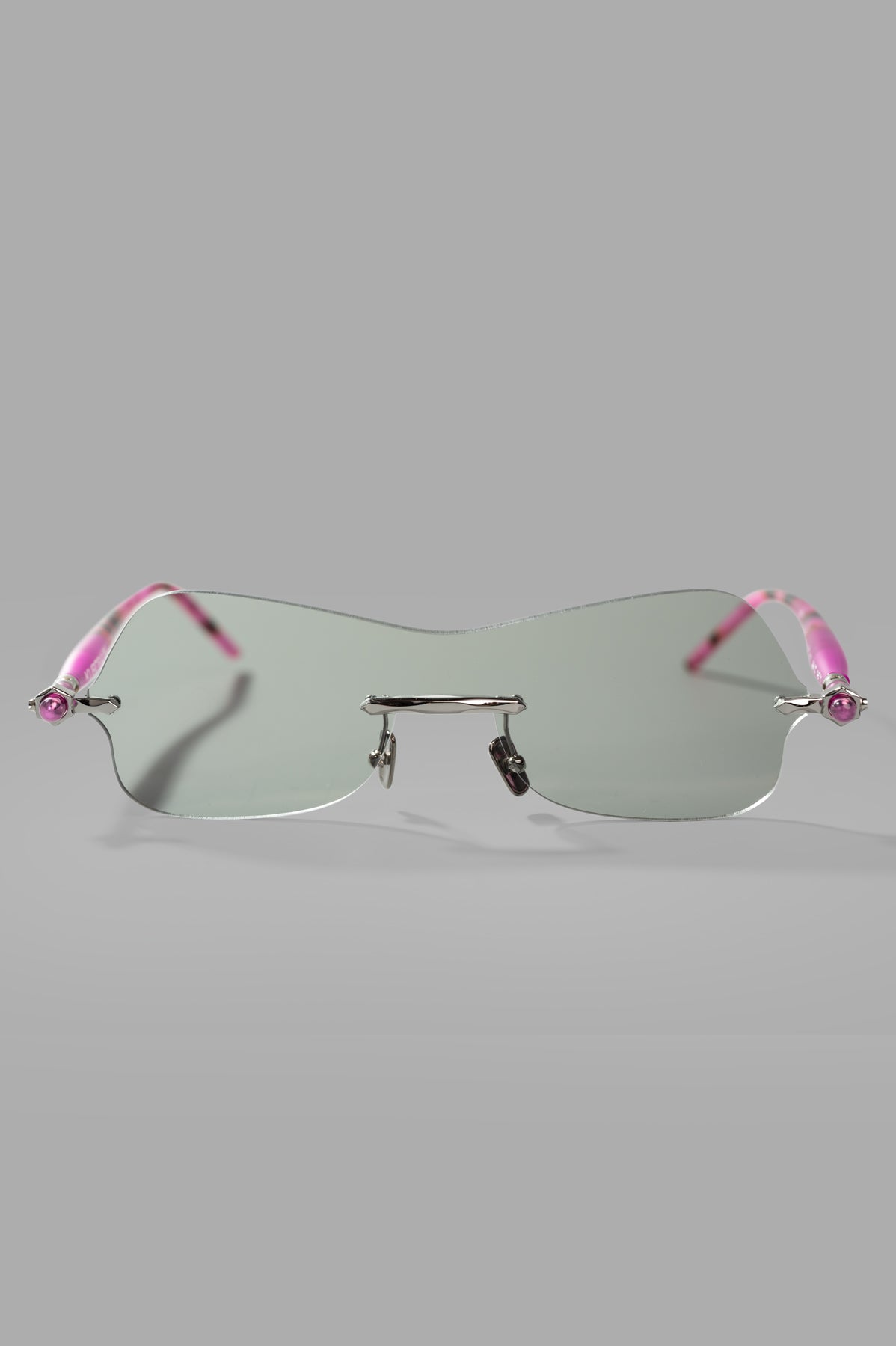
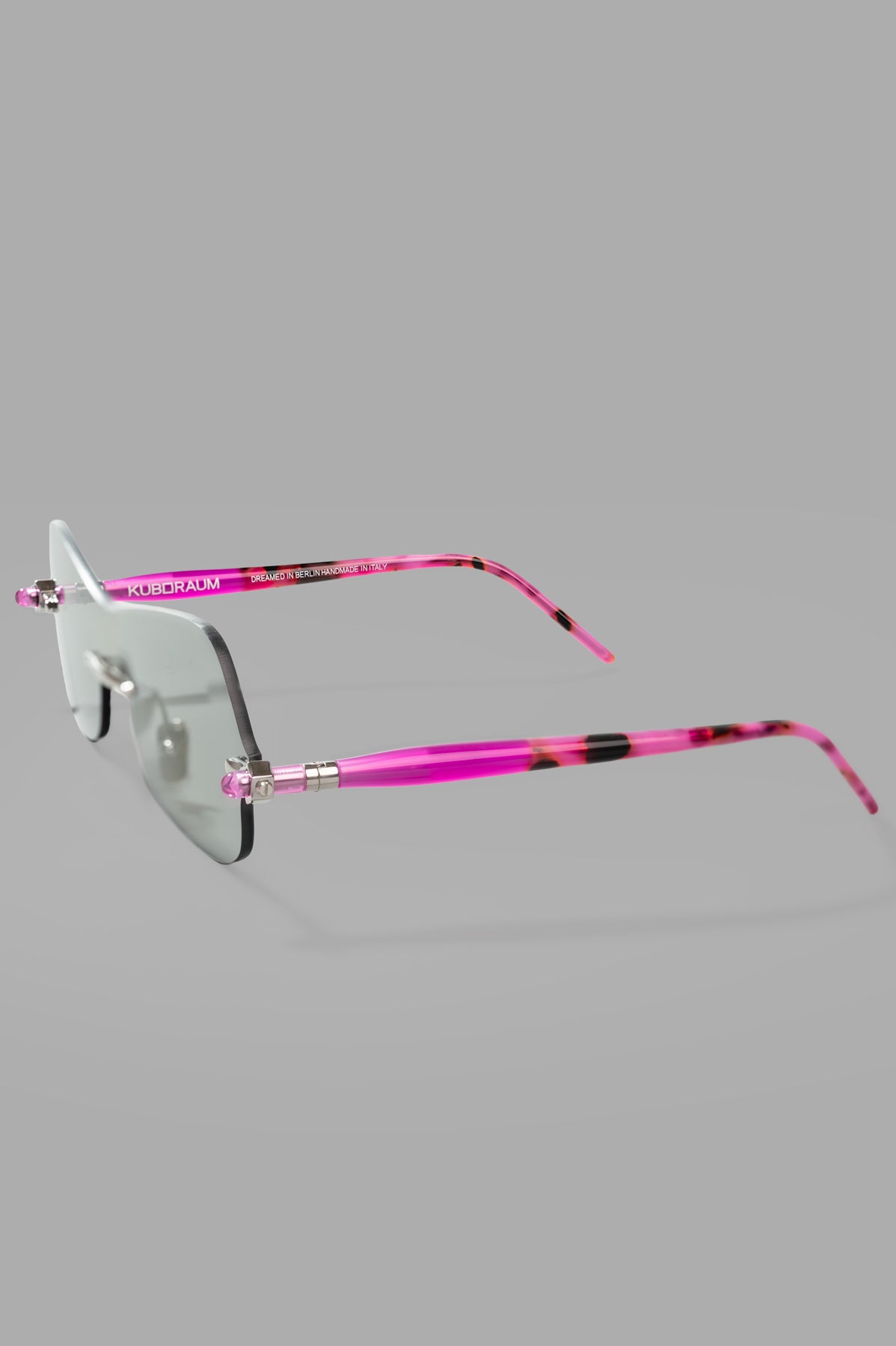
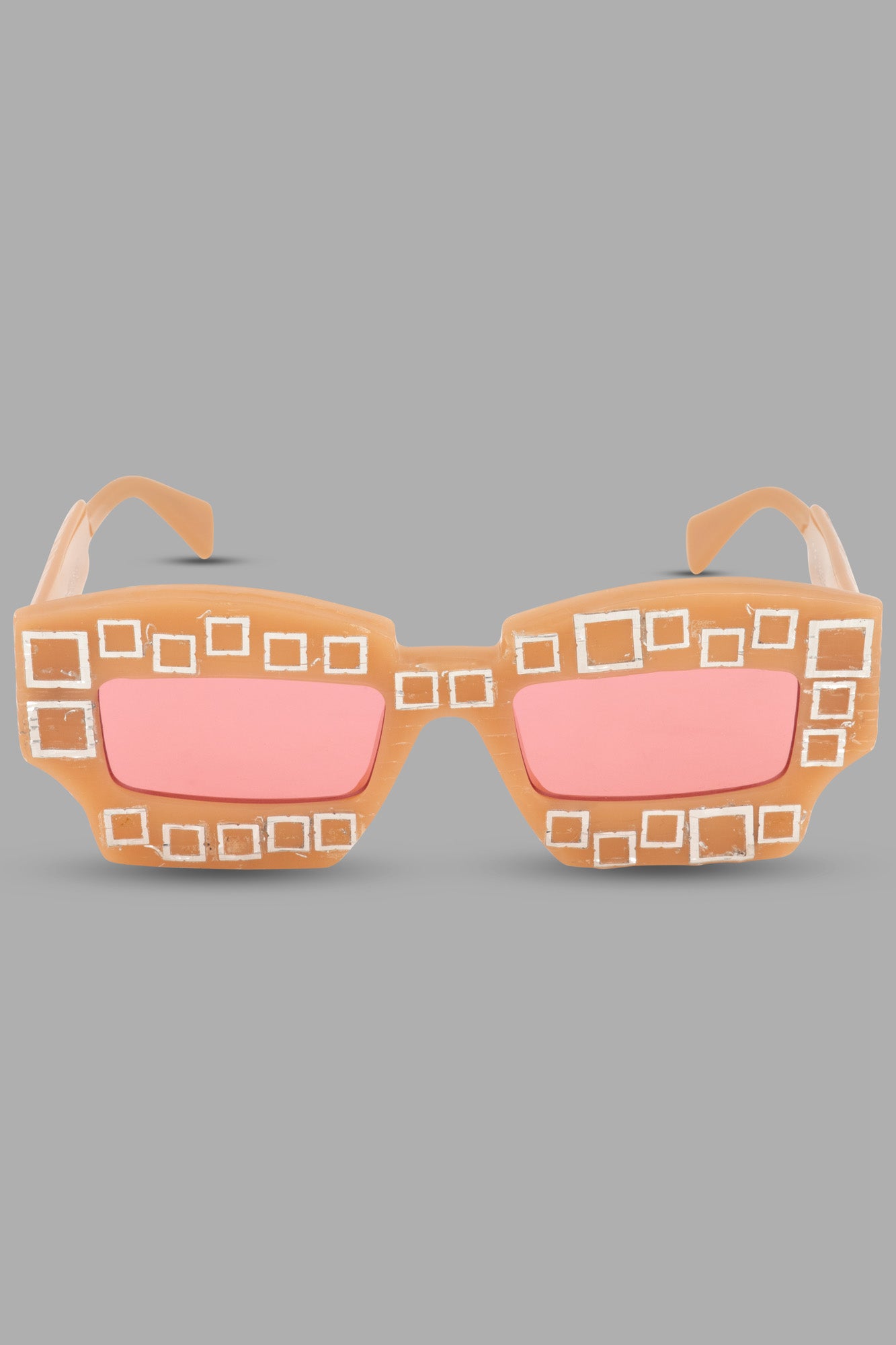
Kuboraum’s proportions lean deliberately expressive. Many acetate styles are milled from substantial slabs, leaving generous bevels, high sidewalls and thick temples that create a strong line across the brow. Square and rectangular fronts (think the celebrated Mask C2 family) present a clean, assertive plane; round and panto shapes in the H and G series soften the profile without losing presence. Rimless and semi‑rimless masks introduce lightness and sharp geometry—octagonal or angular lens cuts anchored by engineered bridges and bolt‑like hardware.
The fit philosophy centers the face: bridges are often saddle or keyhole on acetate, designed to sit broadly and distribute weight; metal pieces typically add discreet pad arms for micro‑adjustments. Hinges are robust to support the mass of the acetate and the drama of the silhouette, while end‑pieces and temple heads are carved to keep the line uninterrupted as the frame turns around the eye. Every decision prioritizes how the frame reads front‑on—and how it moves when you do.
Materials & Finish
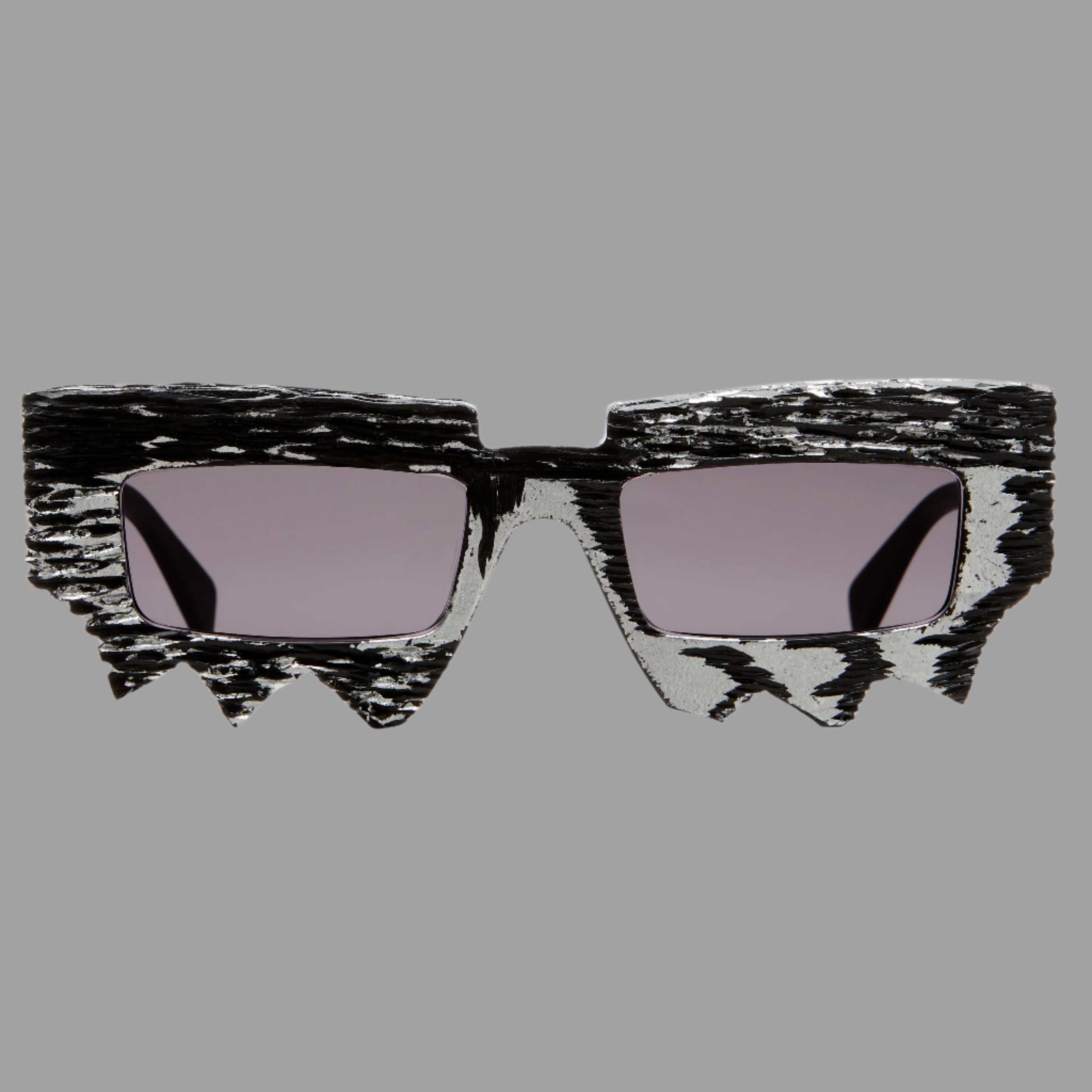
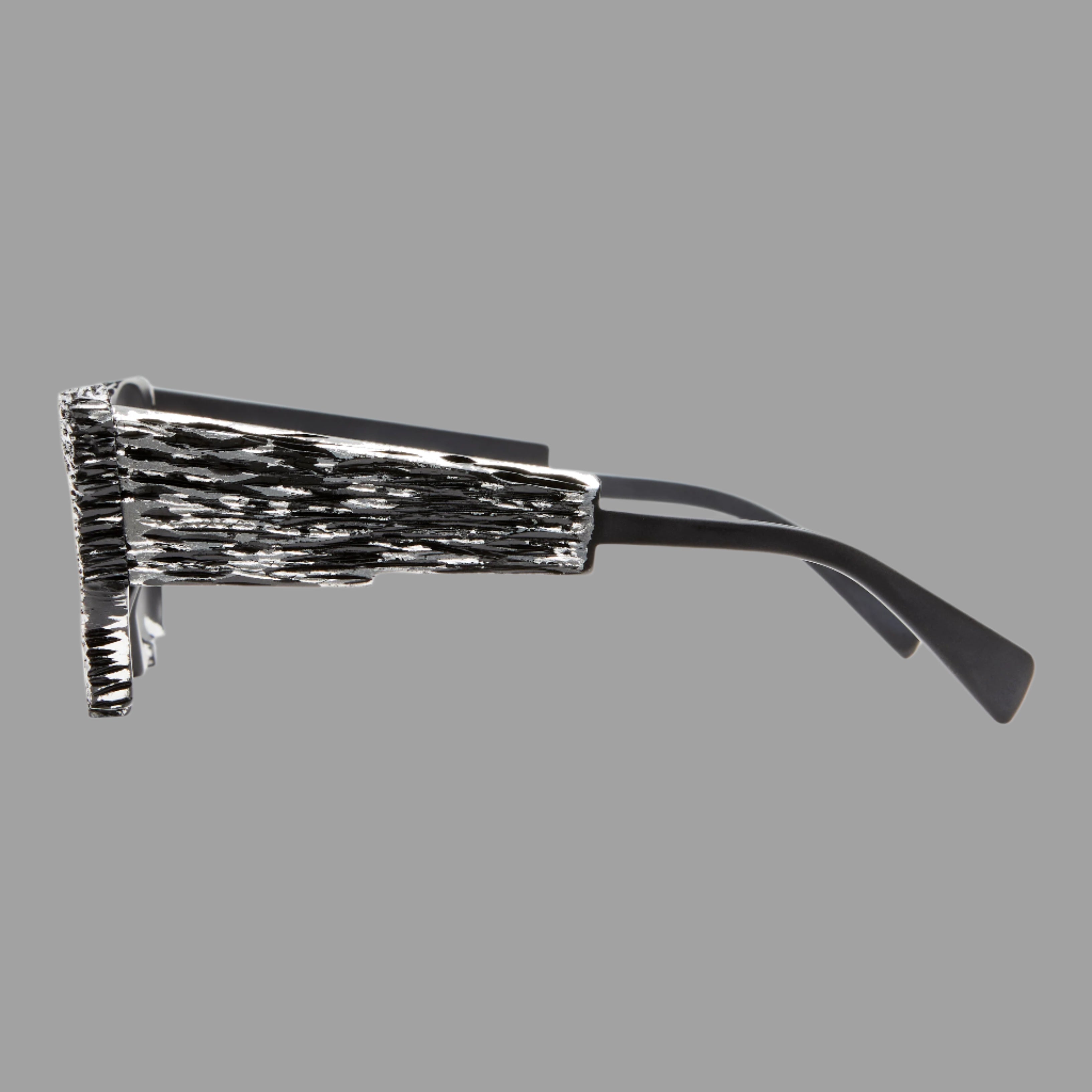
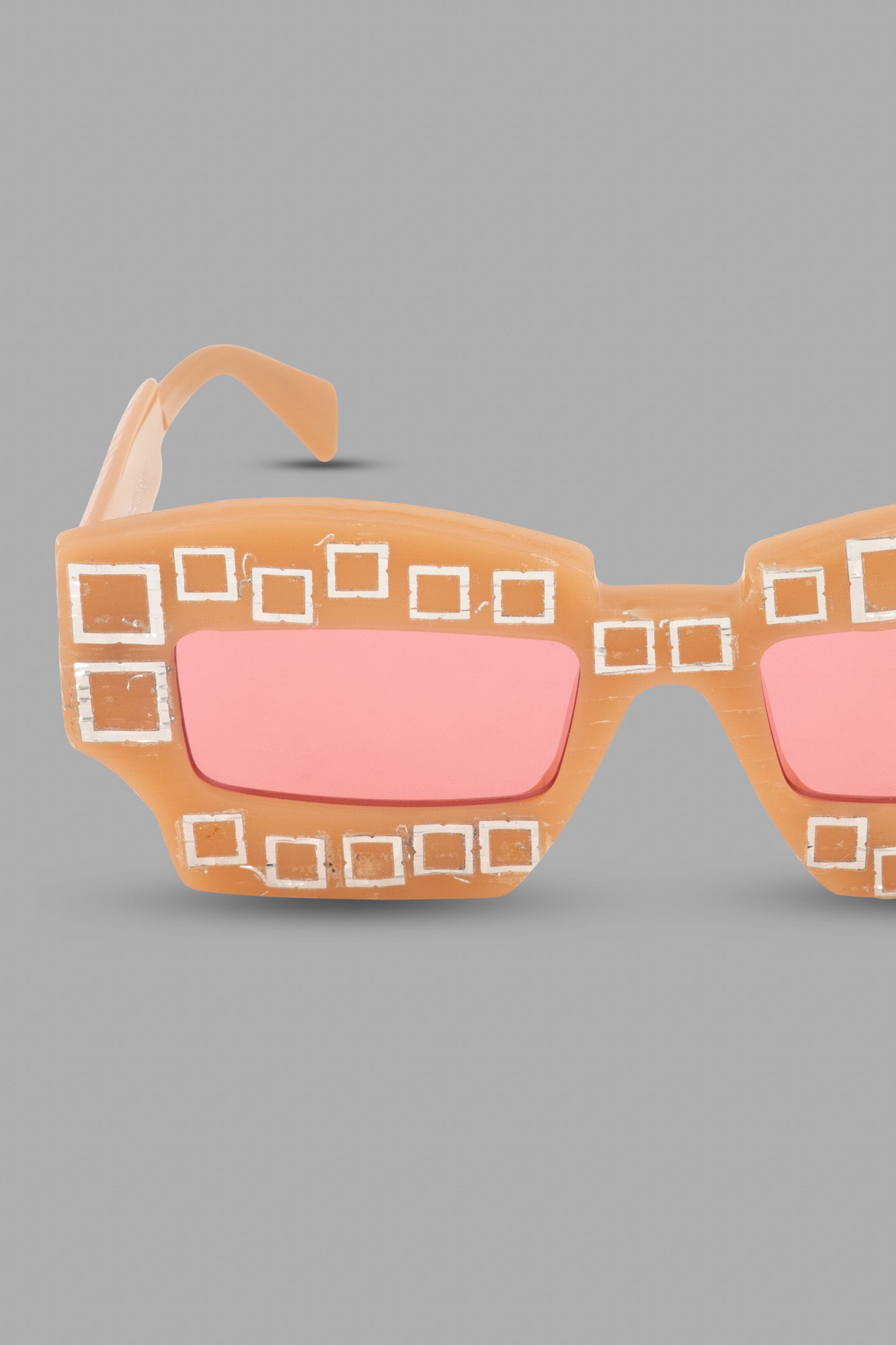
Material choices are purposeful and tactile. Acetate frames are cut from Italian cellulose—selected for depth of color, polish and long‑term stability—then hand‑finished to reveal crisp facets or soften edges to a buttery radius. Surface treatments can transform the feel: matte sandblasts that mute shine, high‑gloss polishes that mirror light, or the brand’s artisanal “burnt” hand‑work that lightly chars the surface for a raw, irregular texture—no two quite alike.
Metal masks appear in palladium‑toned or dark finishes with sculpted bridges and adjustable pads; hardware is part of the composition rather than hidden utility. Rimless lenses are typically CR‑39 in sun and demo for optical, chosen for clarity and weight, with tints that range from smoky neutrals to saturated tones. Throughout, the hand of the maker is evident: edges are dressed, not merely cut; bevels are placed where the light will reward them.
Signatures & Codes
A few house signatures help decode the racks:
-
Mask C2: the square—thick‑walled, flat‑fronted, and almost architectural in presence. It’s the one people recognize across a room.
-
H Series: rounder, often metal‑accented or fully metal, with a lighter wear that retains Kuboraum’s sculptural intent.
-
K Series: bold acetate studies—graphic browlines, crisp facets, unconventional polygons—that push classic shapes into modernist territory.
-
Rimless / Z & P codes: lens‑as‑object designs—octagons, skewed rectangles—secured by visible bridges and fasteners for an industrial‑elegant feel.
-
Hand‑worked “Burnt” finish: an artisanal surface treatment that gives acetate an eroded, cosmic patina—subtle from afar, rich at hand.
Seasonal capsules—like the ongoing collaboration with Berlin’s Hamburger Bahnhof—fold micro‑metal sun masks and 24h acetate frames into the permanent mix, reinforcing the brand’s cross‑disciplinary mindset.
How to Wear It Now
Weekday precision. Pair a black Mask C2 or K‑series rectangle with a sharp blazer and crisp shirting. The frame’s flat front echoes lapels and seams, keeping the look clean even with a bolder silhouette. For optical, clear or light‑smoke 24h lenses keep eyes visible and the effect intentional.
Evening edit. Swap to a metal H‑series round or a rimless octagon with a darker lens. The slimmer construction reads sleek under low light; geometric lens cuts add a quiet edge against satin, velvet, or minimal tailoring.
Weekend ease. Reach for tortoiseshell or striped acetates with softly beveled edges—G‑ or P‑series shapes with warm tints. Think knits, denim, leather sneakers; the frame adds structure to off‑duty texture.
Travel & daylight. Photo‑adjacent 24h configurations or mid‑tinted CR‑39 lenses handle airport to street without constant on‑off. Consider lighter weights—metal H‑series or rimless—if you wear headphones or hats in transit.
Fit & Sizing Notes
Kuboraum publishes measurements by lens width, bridge and temple length. Many acetate masks sit larger than conventional fashion frames; lens widths often run in the 49–55 mm range with substantial temple thickness. If you have a narrower face, look to G‑series rounds, select P‑series geometries, or micro‑metal masks from recent capsules. Low‑bridge or small‑nose wearers who prefer acetate can add stick‑on or custom pad mounts via an optician; metal styles with pad arms offer the most adjustability out of the box.
Weight varies by construction: dense acetate frames feel present (and balanced) when fitted correctly; metal and rimless styles wear lighter for long days. As with any sculptural frame, precise fitting at the bridge and temples makes all the difference—minor pad or temple adjustments can transform comfort.
Care & Longevity
Treat Kuboraum like a small leather good with lenses. Use a microfiber cloth and lens solution only; avoid household cleaners and alcohol, which can haze coatings and disturb artisanal finishes. Heat is acetate’s enemy: don’t leave frames on a dashboard or near radiators, and store them in the supplied case when not in use. If you choose a “burnt” or other hand‑worked surface, clean gently and skip abrasive cloths. Periodically check hinge tension and have screws secured at a trusted optical studio—especially on rimless masks, where fasteners are part of the design. Lenses can be replaced; bring the exact model to an experienced lab, as unconventional lens shapes sometimes require specific edging.
Heritage & Today
Founded in Berlin in 2012 by designer Livio Graziottin and anthropologist Sergio Eusebi, Kuboraum grew from a repurposed former post office that became studio, gallery, and flagship. The motto—dreamed in Berlin, handmade in Italy—still describes the brand’s split personality: concept‑driven and culturally plugged‑in at home, artisanal and exacting in Italian production. The label has expanded its cultural footprint with Kuboraum Editions and a Digital Sound Residency, and continues to stage projects that blur art, music, and product.
Beyond the Berlin flagship, Kuboraum maintains permanent spaces in Milan and Rome and rotates projects in key cities. Recent highlights include an ongoing capsule with Hamburger Bahnhof, Berlin’s contemporary‑art museum, which folds micro‑metal sun masks and acetate frames with 24h lenses into the permanent collection—evidence of a studio that treats eyewear as a medium, not a commodity.
Responsibility
Kuboraum approaches responsibility with targeted, verifiable steps. Since 2019 the company has partnered with Plant‑for‑the‑Planet to operate climate‑neutral, offsetting annual emissions through Gold Standard certificates while funding reforestation on Mexico’s Yucatán Peninsula. The program plants trees annually and supports youth climate education. On the product side, the brand’s reliance on durable Italian acetate and metal, small‑batch production, and repairability through specialist opticians favors longevity over churn—arguably the most meaningful sustainability metric for eyewear.